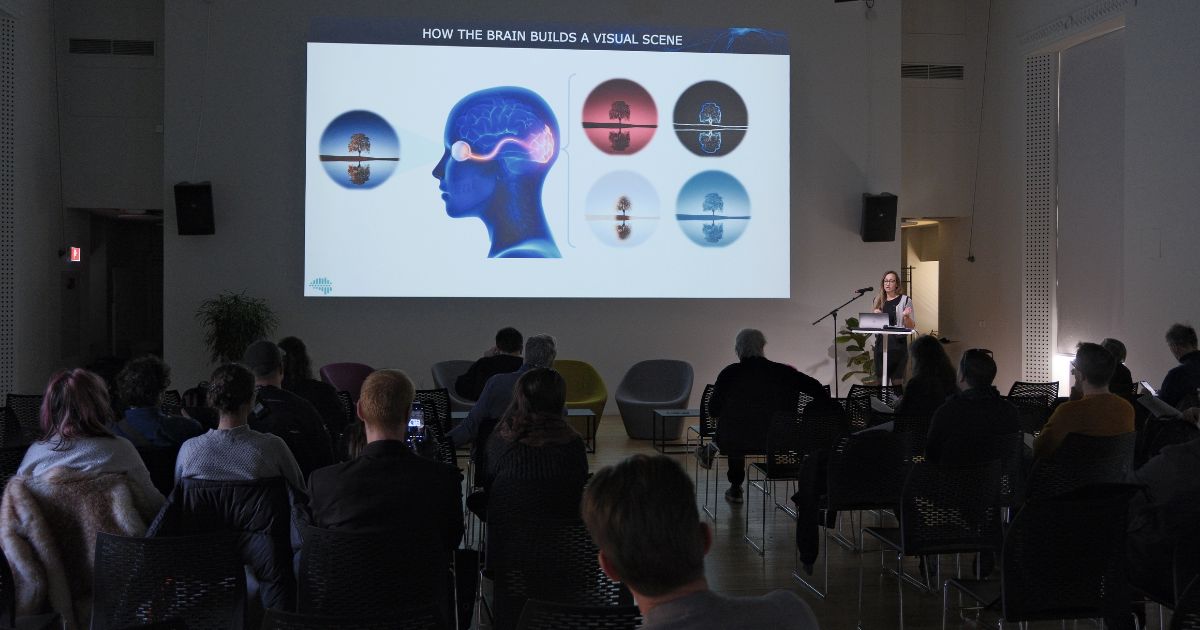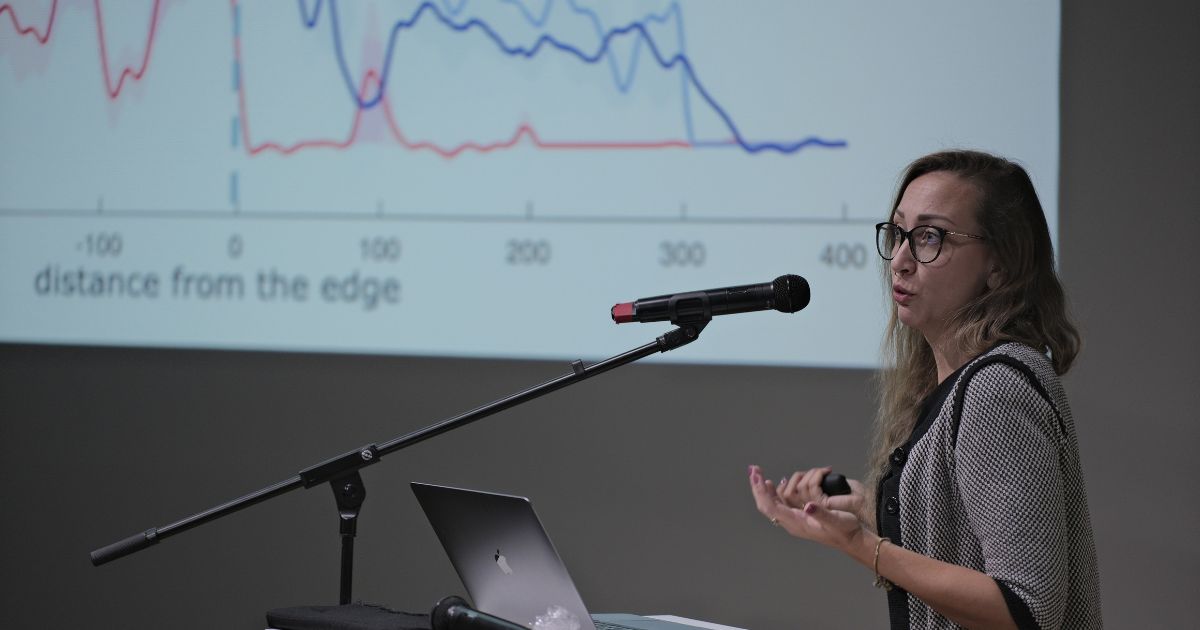
“Art, like science, teaches us to see.” Dr. Flóra Zsófia Fedor, Project Head at BrainVisionCenter, explored the relationship between art, light and neuroscience at the Light Symposium in Budapest, held to mark the 30th anniversary of the International Kepes Society.
Inspired by the legacy of painter, designer and photographer György Kepes, the event provided a fitting setting to examine how we can make brain activity visible and what neuroscience can reveal about the way we process and interpret the visual world.
Flóra also presented some of the technologies used in research at BVC. Femtonics two-photon microscopes allow us to observe neuronal activity, while the Moculus virtual reality system helps us investigate how the brain processes visual information. Our microscopy platform developed for freely moving animals enables neuronal activity to be followed during more natural behaviour.
György Kepes used light to create art; at BVC, we use light to investigate how the brain works. The two are connected by a shared ambition: to make visible what would otherwise remain hidden.