
Developments
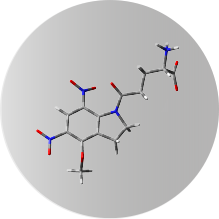
DNI-GLU*TFA
Technology Overview This dinitro-indoline-masked form of glutamate releases the bioactive glutamate more rapidly than any other commercially available compound. It was developed for high-quantum yield requiring less irradiation for release, so its effective concentration is lower than other caging scaffolds. […]
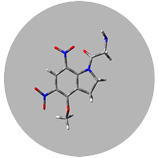
DNI-Gly*TFA
Technology Overview Chemistry designs and develops new caged neurotransmitters for frontier neuroscience research. The two main products are a glutamate derivative and a GABA (gamma-amino-butyric acid) derivative. These dinitro-indoline-masked forms of glutamate and GABA release the bioactive forms of the […]
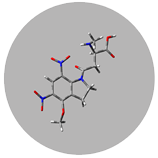
DNI-NMDA*TFA
Technology Overview Chemistry designs and develops new caged neurotransmitters for frontier neuroscience research. The two main products are a glutamate derivative and a GABA (gamma-amino-butyric acid) derivative. These dinitro-indoline-masked forms of glutamate and GABA release the bioactive forms of the […]
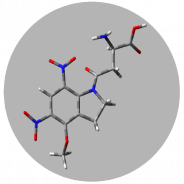
DNI-D-Asp*TFA
Technology Overview Chemistry designs and develops new caged neurotransmitters for frontier neuroscience research. The two main products are a glutamate derivative and a GABA (gamma-amino-butyric acid) derivative. These dinitro-indoline-masked forms of glutamate and GABA release the bioactive forms of the […]
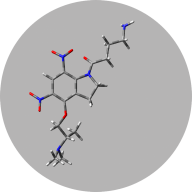
iDMPO-DNI-GABA*TFA
Technology Overview Chemistry designs and develops new caged neurotransmitters for frontier neuroscience research. The two main products are a glutamate derivative and a GABA (gamma-amino-butyric acid) derivative. These dinitro-indoline-masked forms of glutamate and GABA release the bioactive forms of the […]
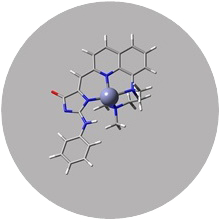
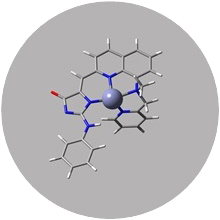
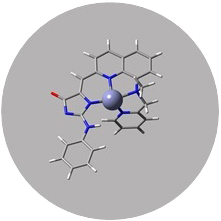
GFZnP-diPic
Technology Overview As the second most common transition metal in the body, the detection of Zn2+ is a necessity in many fields of applications. It has been related to neurodegenerative diseases, such as Alzheimer’s and Parkinson’s, or to important viral […]
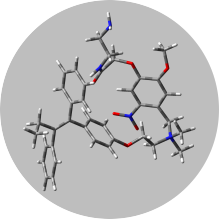
TAM-ONB*TFA
Technology Overview: Cre-recombinase protein can be used for turning genes on/off, and lineage tracing. Fusing it with estrogen receptor (ER) prevents nuclear localization of the Cre-ER protein. Tamoxifen can be used for the activation of the Cre-ER system, thus allowing […]