Project ID No:
2025-1.3.3-NEURO-2025-00001
Project title:
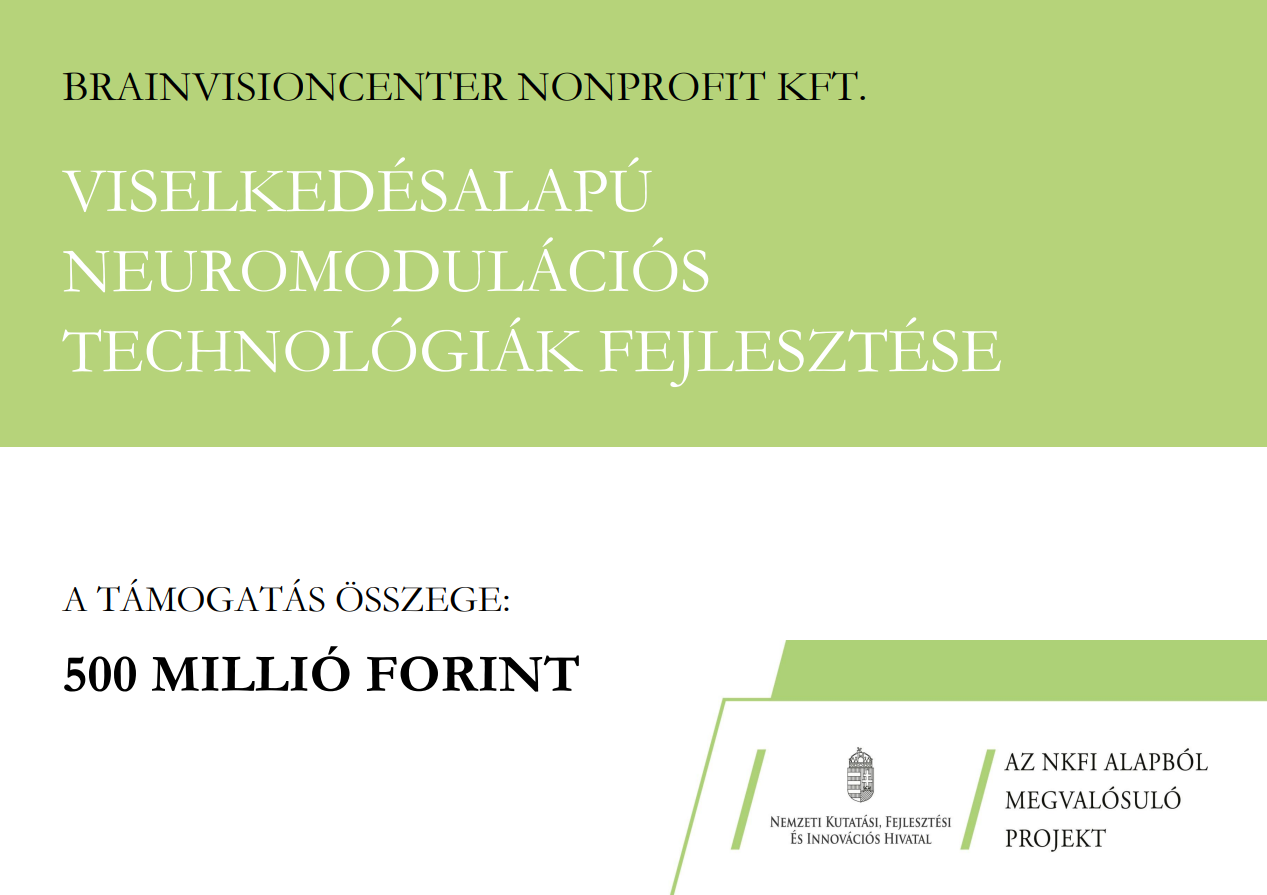
Development of behavior-based neuromodulation technologies for the targeted modulation of sensory systems and neural networks.
Short summary of the project:
The aim of the project is to develop innovative molecular, genetic, and neurophotonics tools that contribute to the partial restoration of visual function and to a deeper understanding of cortical plasticity. One of the central challenges in neuroscience is how to restore sensory function in cases where the optic nerve is damaged or absent. Researchers at the BrainVisionCenter address this problem through a state-of-the-art, multidisciplinary approach that integrates chemistry, biology, engineering, and neuroscience.
A major development direction focuses on the synthesis of photolabile NGF-mimetic compounds that enable light-controlled modulation of cell growth and network connectivity. Such photoactivatable molecules may allow precise regulation of regenerative processes and support partial restoration of visual function. In parallel, we are developing a novel three-dimensional, real-time motion-corrected microscopy system capable of high-precision imaging in moving samples. Complementing this approach, low-toxicity DNA-binding dyes are being designed to enable long-term imaging of living cells.
The project also includes the further development of the Moculus virtual reality–based experimental platform, which tightly couples visual stimuli with behavioral responses, thereby enabling controlled investigation of vision-driven learning under laboratory conditions. Concurrently, we are establishing a real-time cortical pattern reactivation method designed to enhance visual perception and learning efficiency through the replay of neuronal activity patterns.
Our genetic development efforts involve the generation of novel recombinant adeno-associated viral (rAAV) vectors for the targeted delivery of next-generation optical sensors and light-sensitive proteins into defined neuronal populations. In addition, we are refining maintenance protocols for human brain tissue to facilitate the translational application of laboratory findings to human systems. A core basic research pillar of the project examines dendritic activity in cortical interneurons, providing new insight into how these cell types contribute to vision-driven learning and cortical plasticity. This knowledge is essential for establishing long-term, neuron-based strategies for visual rehabilitation.
A key strength of the project lies in the integration of chemical, genetic, technological, and fundamental research components, which operate synergistically rather than independently. The resulting comprehensive knowledge base may open new avenues for treating certain forms of blindness and for advancing research into other neurological disorders. The program will yield at least one documented and accessible laboratory innovation, peer-reviewed scientific publications, and new collaborative networks. Beyond its impact on the scientific community, the outcomes are expected to contribute in the longer term to socially relevant healthcare and technological innovations.
Project implementation period: 2025.11.01 – 2026.04.30
Project budget: 500.000.000 Ft
Project aid intensity: 100%
Project location:
1094 Budapest, Liliom u. 43.
1094 Budapest, Tűzoltó u. 59.
7673 Kővágószőlős 524/1.