
Technology Overview
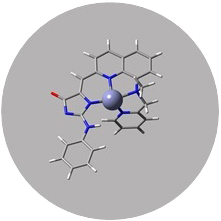
As the second most common transition metal in the body, the detection of Zn2+ is a necessity in many fields of applications. It has been related to neurodegenerative diseases, such as Alzheimer’s and Parkinson’s, or to important viral strains, such as the SARS-Cov-2. Therefore, we have developed three brand new fluorescent Zn2+ sensors, which have the capacity for spatial and temporal monitoring, which has not been the case with previous methods. These are sensors for one and two-photon microscopy, which are the two most available, sensitive and inexpensive methods for Zn2+ monitoring, with the aid of the high solubility, high fluorescens and optimal selectivity.
Features
- Name: (Z)-5-((8-(bis(pyridin-2- ylmethyl)amino)quinolin-2- yl)methylene)-2-(phenylamino)-3,5- dihydro-4H-imidazol-4-on
- Molecular formula: C31H25N7O
- MW: 511.59 Da
- Standard packaging size: 250 µL, 5 mM
Benefits
-
- our most sensitive sensor for Zn2+
- With an exceptional affinity coefficient of K’d = 0.15 nM
- The excitation wavelength is 441 nm, while the emission is 503 nm
- The 2P-excitation wavelength is 900 nm
Please send an email to sales@brainvisioncenter.com to request a quotation.
References
- Two-photon fluorescent chemosensors based on the GFP-chromophore for the detection of Zn2+ in biological samples – From design to application
A. Csomos, E. Kovács, M. Madarász, F. Zs. Fedor, A. Fülöp, G. Katona, B. Rózsa, Z. Mucsi, Sensors and Actuators B: Chemical (2023)